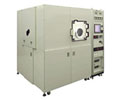
Vacuum Pumping Systems
A vacuum pumping system combines multiple vacuum pumps to create a desired vacuum environment.
Vacuum technology is widely utilized in a variety of fields, ranging from cutting-edge science and technology to general industry. The required vacuum conditions vary widely depending on the application. From an environmental perspective, exhausting condensable and corrosive gases and treating wastewater and used oil are critical issues that must be addressed. Energy conservation is also an important and long-standing issue. The required pressure range varies widely for each application.
Each type of vacuum pump has its own unique characteristics. Combining them makes it possible to satisfy these various requirements.
Osaka Vacuum’s Commitment to Vacuum Pumping Systems
Our mission is to provide reliable products that customers can use with confidence and satisfaction for a long time. By leveraging our extensive product lineup, comprehensive technical expertise, and proven delivery record, we will continue to offer the best vacuum pumping systems tailored to our customers’ needs.
List of Vacuum Pumping Systems
-
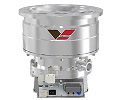
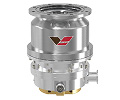
Vacuum Pumping Systems that use Turbo Molecular Pumps
-
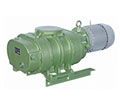
Vacuum Pumping Systems that use Mechanical Booster Pumps
-
Vacuum Pumping Systems that use Oil-sealed Rotary Vacuum Pumps
-
Vacuum Pumping Systems that use Liquid-ring Vacuum Pumps
-
Vacuum Pumping Systems that use Ejectors
-
Vacuum Pumping Systems that use Dry Vacuum Pumps
Vacuum Pumping Systems that use Turbo Molecular Pumps
Combination with an Oil-sealed Rotary Vacuum Pump
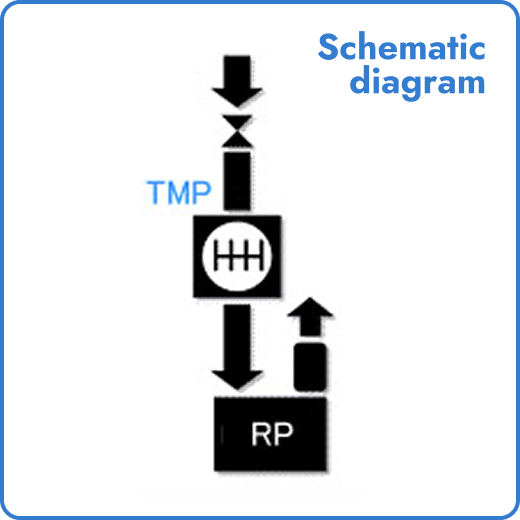
By combining a turbo molecular pump with an oil-sealed rotary vacuum pump as a backing pump, it is easy to create ultra-high vacuum at a low cost.
The ST Series is a compact turbo molecular pumping system that integrates all the essential components necessary for high-vacuum pumping into one cart. Pumping down to high vacuum is easy with simple operation.
The cart is equipped with casters and can be moved wherever and whenever needed.
It features the TG-F Series turbo molecular pump, which is tolerant of external shocks and can be moved while operating. Optional accessories are available to meet your needs.
Industrial fields
- Energy
- Medical / Pharmaceuticals
- Laboratory instruments
- Aerospace / R & D
- Automotive / Aviation
- Semiconductor / Electronic components
- Material
Product Lineup
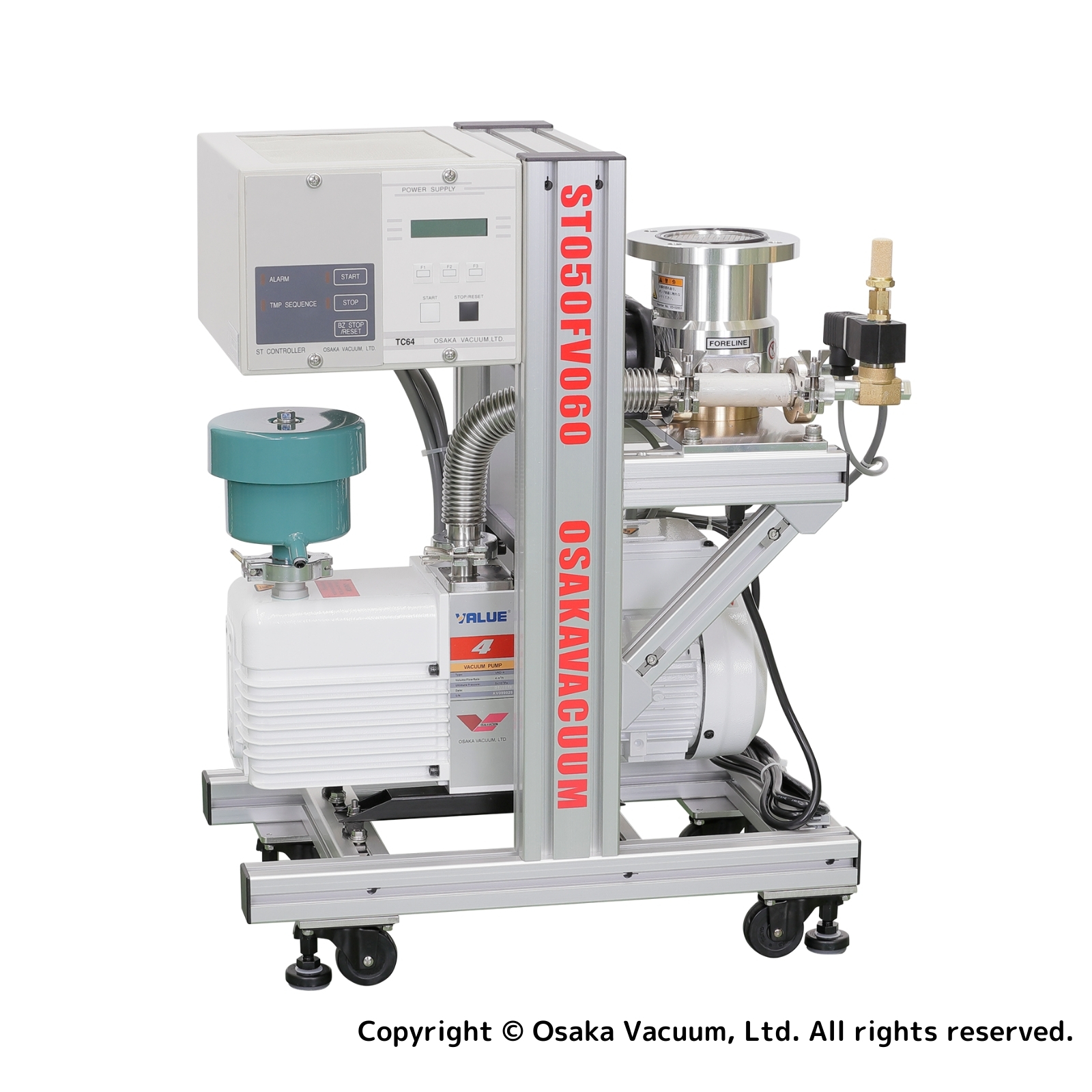
Combination with a Dry Vacuum Pump
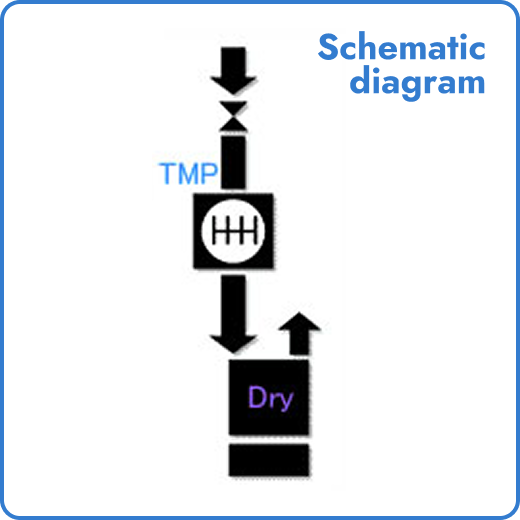
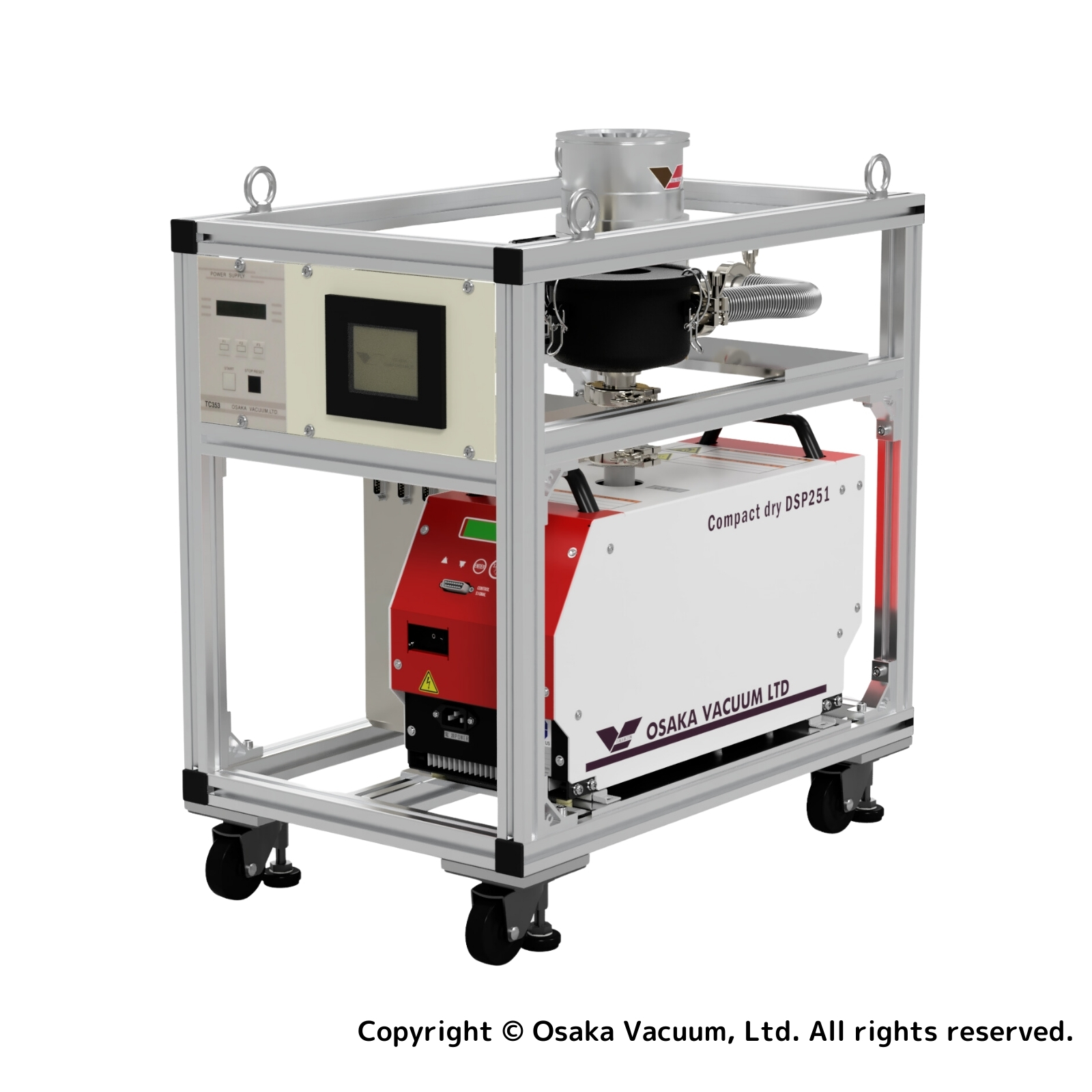
Systemizing a dry vacuum pump as a backing pump for a turbo molecular pump, clean, oil-free ultra-high vacuum (UHV) and extremely high vacuum (XHV) can be achieved more easily.
The ST Series is a compact turbo molecular pumping system that integrates all the essential components necessary for high-vacuum pumping into one cart.
The cart is equipped with casters and can be moved wherever and whenever needed.
It features the TG-F Series turbo molecular pump, which is tolerant of external shocks and can be moved while operating.
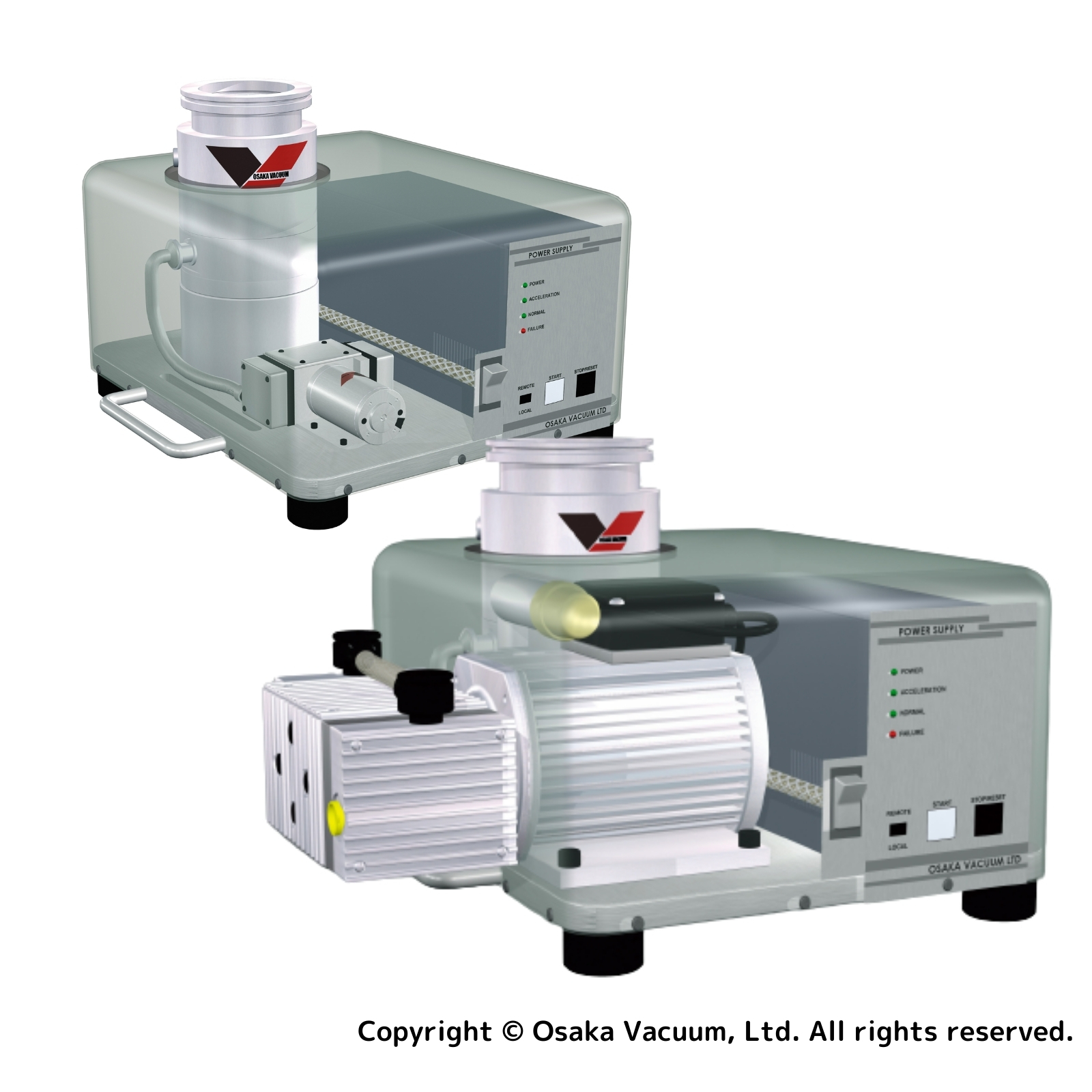
The ST Compact Series is a laptop-sized desktop pumping station that is simple to operate. It is equipped with the TG70F high-compression turbo molecular pump.
The size of the backing diaphragm pump can be selected for the chamber size.
This series is ideal for an R&D environment as a portable pumping unit.
Industrial fields
- Energy
- Medical / Pharmaceuticals
- Laboratory instruments
- Aerospace / R & D
- Automotive / Aviation
- Semiconductor / Electronic components
- Material
Product Lineup
Other specifications
Turbo Molecular Pumps in tandem
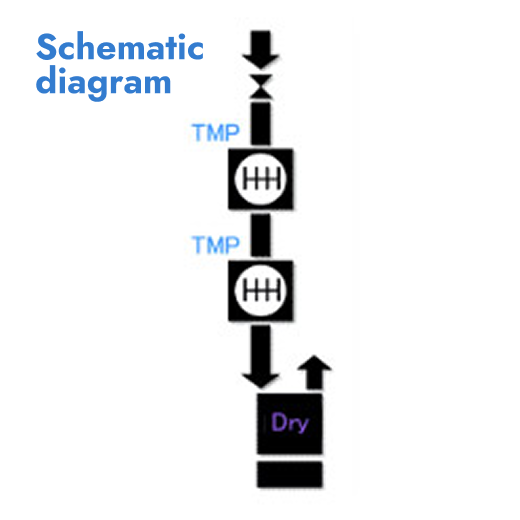
A turbo molecular pump for ultra-high vacuum (UHV) can be backed by another turbo molecular pump. When used in tandem, these pumps can achieve a high pumping speed for hydrogen in the XHV range, helping to stabilize it.
Combination with a Getter pump or XHV pumps
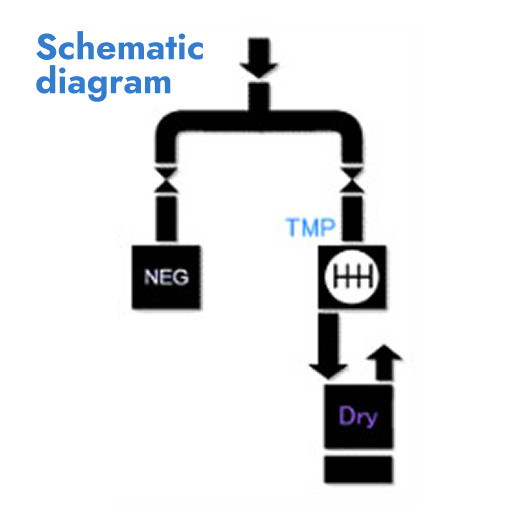
Adding a turbo molecular pump to an extreme high vacuum pump such as an ion pump, getter pump, or non-evaporating getter pump (NEG pump), makes pumping various gases in extreme high vacuums easier and more stable.
Vacuum Pumping Systems that use Mechanical Booster Pumps
Combination with an Oil-sealed Rotary Vacuum Pump
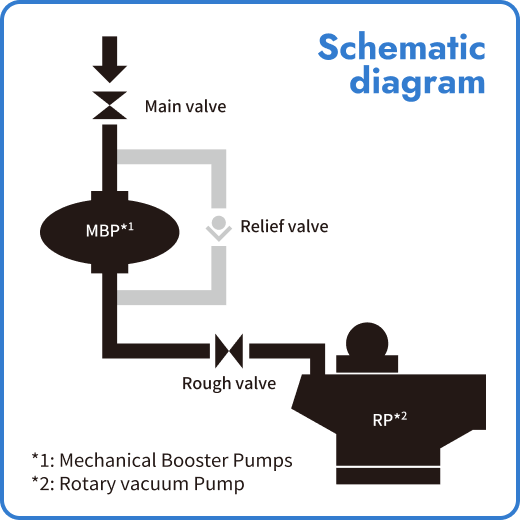
A mechanical booster pump combined with an oil-sealed rotary vacuum pump can efficiently evacuate a large volume. This has been proven in heat treating and welding applications.
Two stages of Mechanical Booster Pumps combined with an Oil-sealed Rotary Vacuum Pump
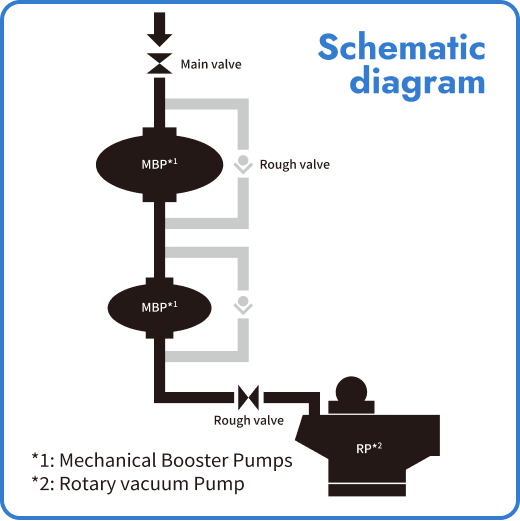
Combining two mechanical booster pumps in tandem allows the vacuum pumping system to reach a higher vacuum.
The PRM/SR series pumping system consists of a single- or multi-stage mechanical booster pump (Roots vacuum pump) and an oil-sealed rotary pump. Oil-sealed rotary pumps are the most cost-effective, efficient, and user-friendly vacuum pumps that can exhaust to the atmosphere, making them widely used for various applications worldwide.
Two oil-sealed rotary vacuum pumps are available: the rotary plunger type (Kinney type) P/K series and the rotary vane type (Gede type) VRD/VSV series. The rotary plunger type is efficient, durable, robust, and easy to maintain. The rotary vane type is popular due to its low vibration and small size.
Industrial fields
- Automotive
- Metal and Steel
- Packaging
- Foods / Pharmaceuticals
- Chemical
- Medical
- Electrical & Electronic equipment
- Electric machine
Product Lineup
-
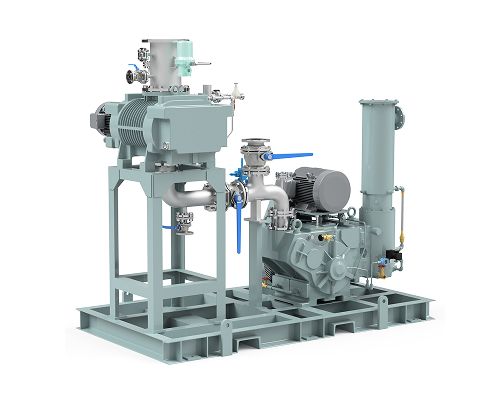
PRM Series
-
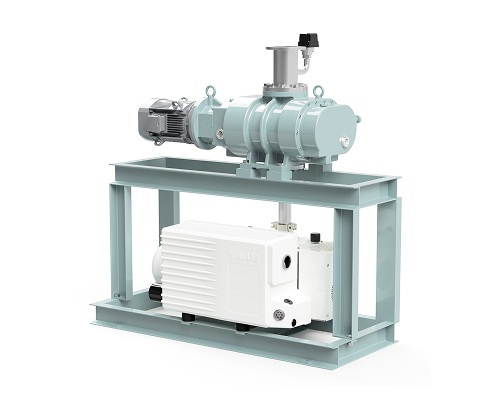
SR Series
Combination with a Liquid-ring Vacuum Pump
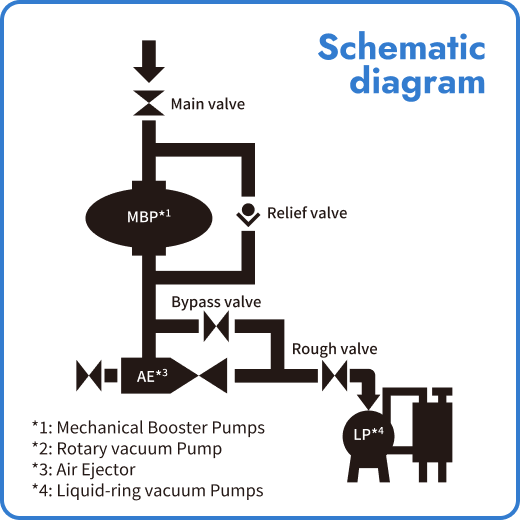
A mechanical booster pump combined with a liquid ring vacuum pump is ideal for pumping condensable gases and is used in vacuum drying and distillation processes.
Two stages of Mechanical Booster Pumps combined with a Liquid-ring Vacuum Pump
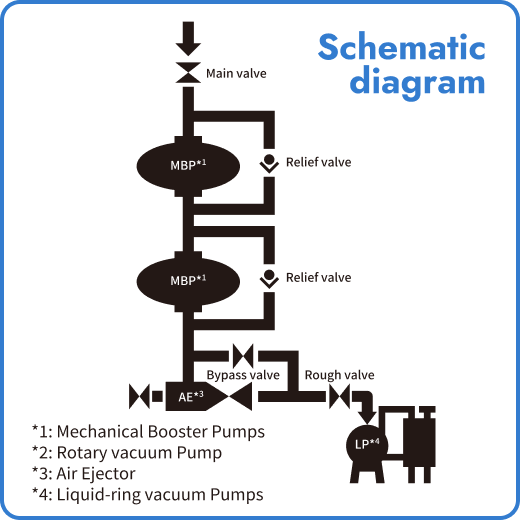
A pumping system with two or more mechanical booster pumps in tandem reaches a higher vacuum. These systems are widely used in vacuum drying equipment and other applications.
The PRL series consists of single- or multi-stage mechanical booster pumps (Roots vacuum pumps) and a liquid ring vacuum pump. Using a liquid ring vacuum pump as the primary pump enables the system to perform well when pumping water vapor, organic solvents, and other condensable components.
Circulating sealing water in a closed-cycle system minimizes the amount of wastewater containing organic solvents. The same organic solvent in the suction gas can be used as a sealing liquid. This simplifies suction gas recovery and helps comply with effluent standards.
For specific applications, a pumping system incorporates one or more roots vacuum pump stages to achieve a high pumping speed in medium vacuum ranges and reach higher vacuums with relatively low power.
Industrial fields
- Automotive
- Metal and Steel
- Packaging
- Foods / Pharmaceuticals
- Chemical
- Medical
- Electric machine
Product Lineup
-
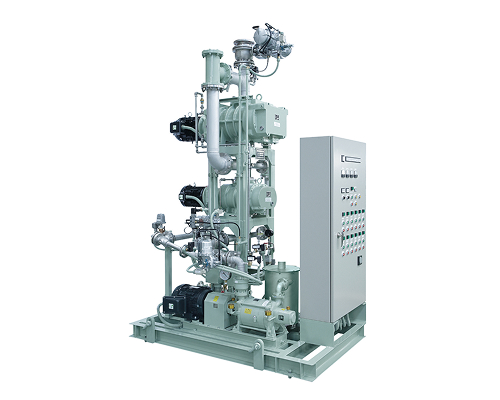
PRL Series
Combination with a Dry Vacuum Pump
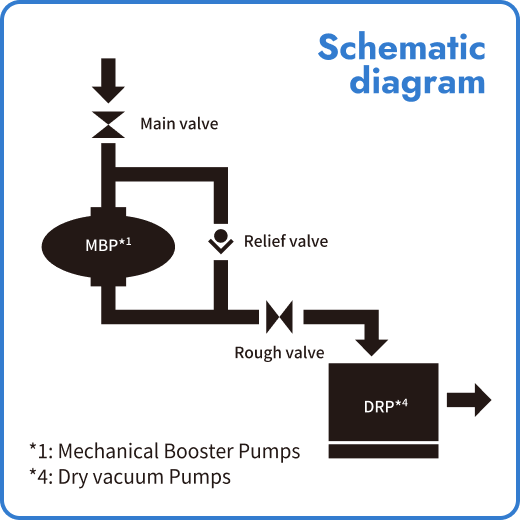
The system uses a dry vacuum pump as its primary pump. It is oil-free and eco-friendly, making it ideal for corrosive gas pumping.
Two stages of Mechanical Booster Pumps combined with a Dry Vacuum Pump
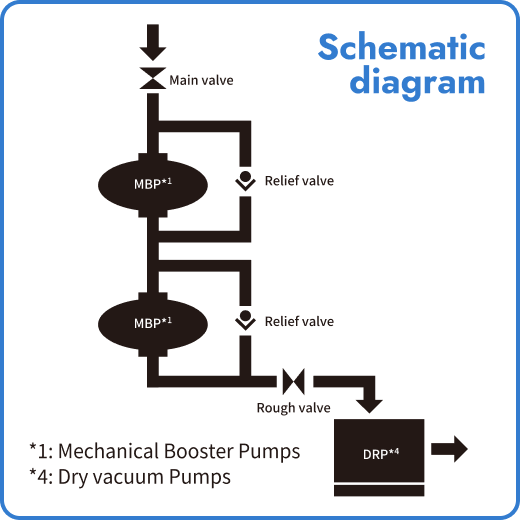
The two mechanical booster pumps in tandem enable this environmentally friendly pumping system to reach a high vacuum.
The PRD series consists of single- or multi-stage mechanical booster pumps (Roots vacuum pumps) and a dry pump. Using a dry pump as the primary pump makes the system compatible with corrosive applications and oil-free, thus making it environmentally friendly.
For specific applications, the system incorporates one or more stages of Roots vacuum pumps to effectively reach higher vacuums.
Industrial fields
- Foods / Pharmaceuticals
- Chemical
- Medical
- Metal and Steel
- Automotive
Product Lineup
-
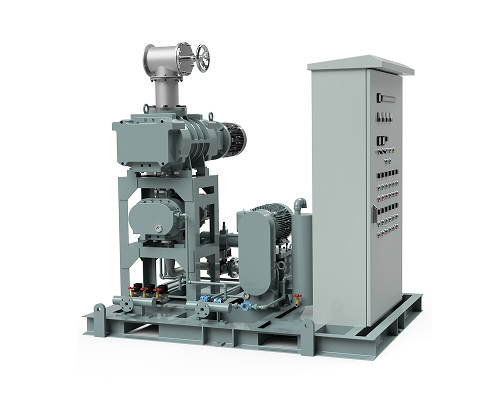
PRD Series
Other specifications
Combination with Ejectors and a closed-loop Liquid-ring Vacuum Pump
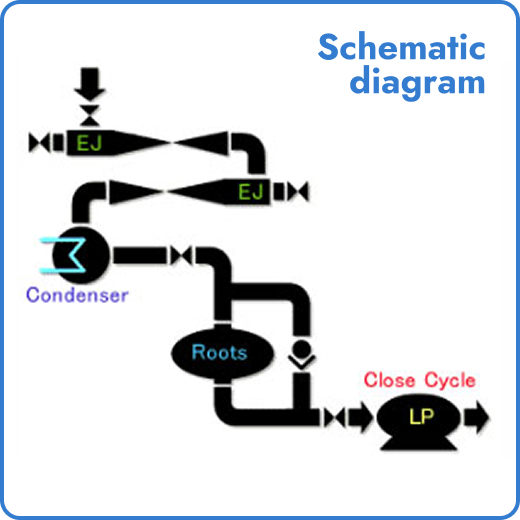
Combining ejectors for large-volume pumping, a closed-loop liquid ring vacuum pump that has no wastewater treatment need, and a mechanical booster makes an environmentally friendly pumping system. The number of ejector stages or the presence of a mechanical booster can be adjusted according to the application.
Vacuum Pumping Systems that use Oil-sealed Rotary Vacuum Pumps
Combination with a Mechanical Booster Pump
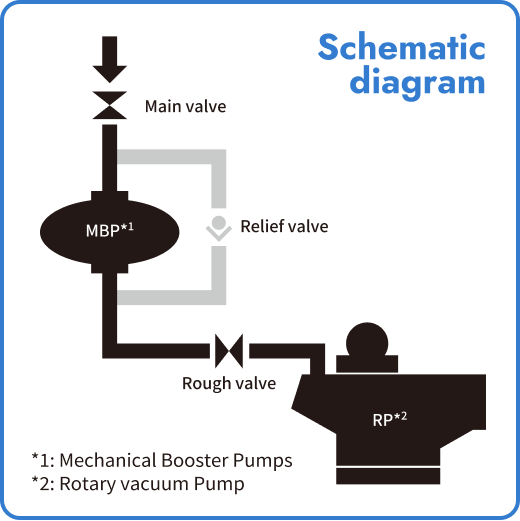
A mechanical booster pump combined with an oil-sealed rotary vacuum pump can efficiently evacuate a large volume. This has been proven in heat treating and welding applications.
Combination with two stages of Mechanical Booster Pumps
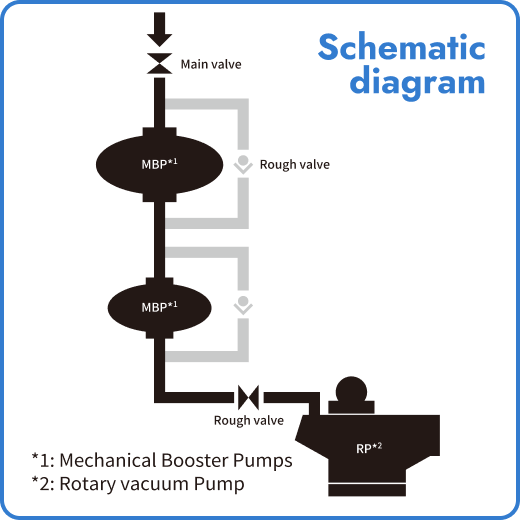
Combining two mechanical booster pumps in tandem allows the vacuum pumping system to reach a higher vacuum.
The PRM/SR series pumping system consists of a single- or multi-stage mechanical booster pump (Roots vacuum pump) and an oil-sealed rotary pump. Oil-sealed rotary pumps are the most cost-effective, efficient, and user-friendly vacuum pumps that can exhaust to the atmosphere, making them widely used for various applications worldwide.
Two oil-sealed rotary vacuum pumps are available: the rotary plunger type (Kinney type) P/K series and the rotary vane type (Gede type) VRD/VSV series. The rotary plunger type is efficient, durable, robust, and easy to maintain. The rotary vane type is popular due to its low vibration and small size.
Industrial fields
- Automotive
- Metal and Steel
- Packaging
- Foods / Pharmaceuticals
- Chemical
- Medical
- Electrical & Electronic equipment
- Electric machine
Product Lineup
-
PRM Series
-
SR Series
Vacuum Pumping Systems that use Liquid-ring Vacuum Pumps
Combination with a Mechanical Booster Pump
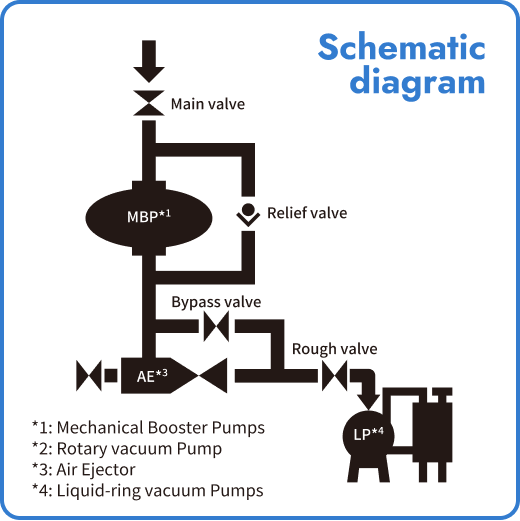
A mechanical booster pump combined with a liquid ring vacuum pump is ideal for pumping condensable gases and is used in vacuum drying and distillation processes.
Combination with two stages of Mechanical Booster Pumps
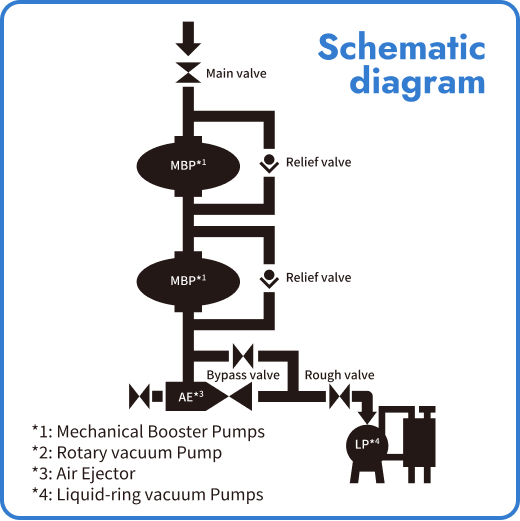
A pumping system with two or more mechanical booster pumps in tandem reaches a higher vacuum. These systems are widely used in vacuum drying equipment and other applications.
The PRL series consists of single- or multi-stage mechanical booster pumps (Roots vacuum pumps) and a liquid ring vacuum pump. Using a liquid ring vacuum pump as the primary pump enables the system to perform well when pumping water vapor, organic solvents, and other condensable components.
Circulating sealing water in a closed-cycle system minimizes the amount of wastewater containing organic solvents. The same organic solvent in the suction gas can be used as a sealing liquid. This simplifies suction gas recovery and helps comply with effluent standards.
For specific applications, a pumping system incorporates one or more roots vacuum pump stages to achieve a high pumping speed in medium vacuum ranges and reach higher vacuums with relatively low power.
Industrial fields
- Automotive
- Metal and Steel
- Packaging
- Foods / Pharmaceuticals
- Chemical
- Medical
- Electric machine
Product Lineup
-
PRL Series
Other specifications
Combination with Ejectors
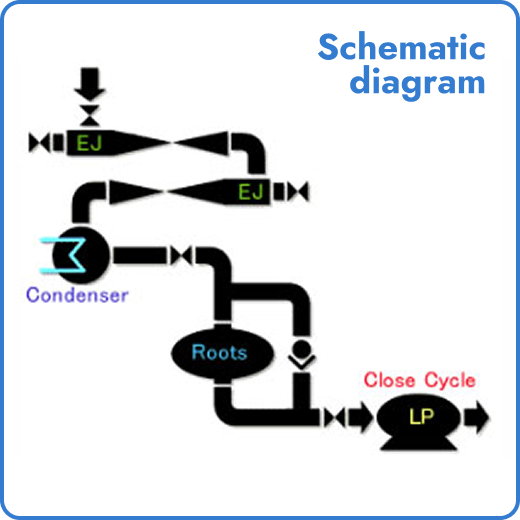
Combining ejectors for large-volume pumping, a closed-loop liquid ring vacuum pump that has no wastewater treatment need, and a mechanical booster makes an environmentally friendly pumping system. The number of ejector stages or the presence of a mechanical booster can be adjusted according to the application.
Vacuum Pumping Systems that use Ejectors
Combination with a Liquid-ring Vacuum Pump
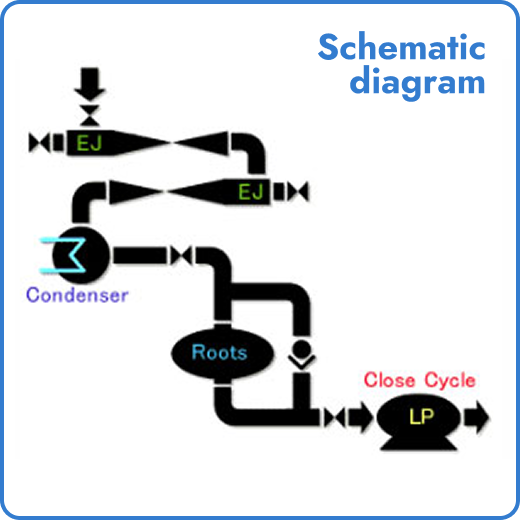
Combining ejectors for large-volume pumping, a closed-loop liquid ring vacuum pump that has no wastewater treatment need, and a mechanical booster makes an environmentally friendly pumping system. The number of ejector stages or the presence of a mechanical booster can be adjusted according to the application.
Combination with a Dry Vacuum Pump
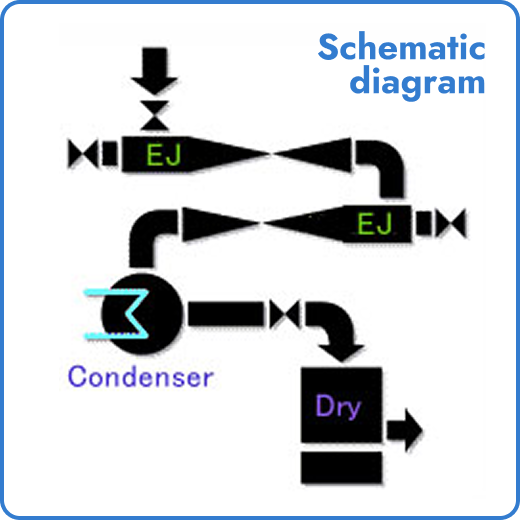
Combining ejectors for large-volume pumping with a dry vacuum pump creates an oil-free, environmentally friendly pumping system.
Two booster stage four stage Ejector system
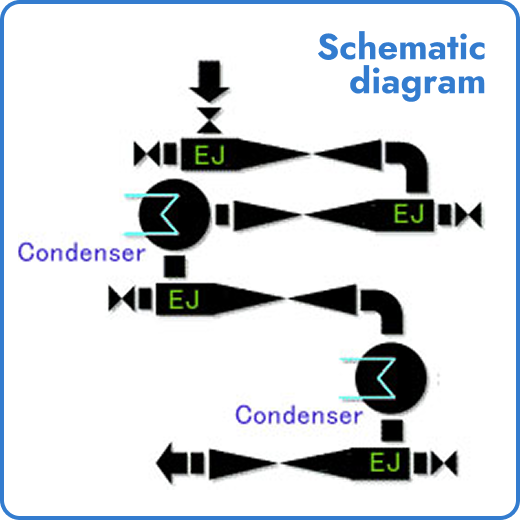
This system is ideal for large-volume pumping applications, such as degassing. The number of stages can be adjusted according to the inlet pressure. The system can be made of various anti-corrosive materials and designed according to specific needs.
To use utilities such as drive steam and cooling water efficiently, ejectors are designed specifically for each application. Please specify the conditions listed below when inquiring.
Suction pressure, suction gas contents (specify molecular mass and characteristics if possible), and throughput
Suction gas temperature, type of drive source, pressure, and cooling water temperature.
Preferred condenser type and initial pump down time
Vacuum Pumping Systems that use Dry Vacuum Pumps
Combination with a Mechanical Booster Pump
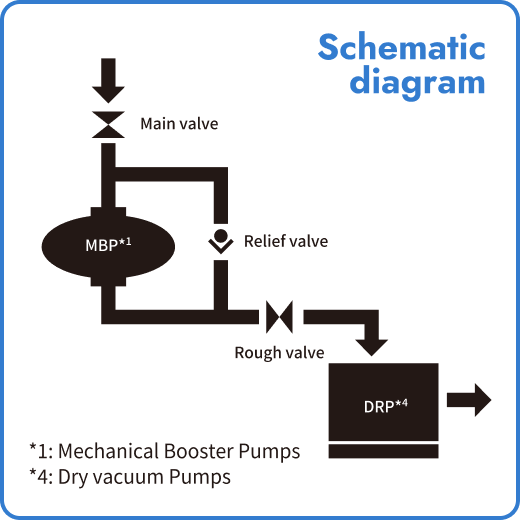
The system uses a dry vacuum pump as its primary pump. It is oil-free and eco-friendly, making it ideal for corrosive gas pumping.
Two stages of Mechanical Booster Pumps combined with a Dry Vacuum Pump
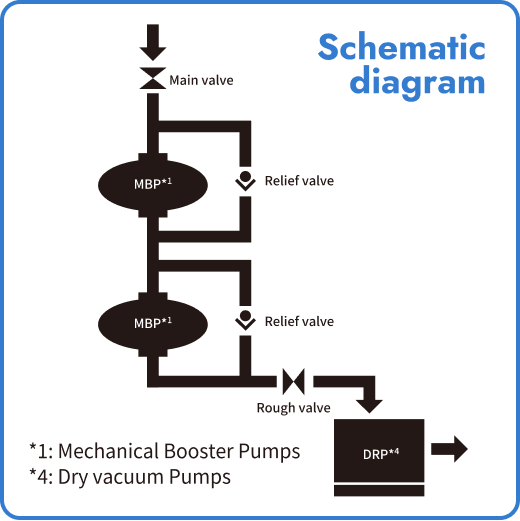
The two mechanical booster pumps in tandem enable this environmentally friendly pumping system to reach a high vacuum.
The PRD series consists of single- or multi-stage mechanical booster pumps (Roots vacuum pumps) and a dry pump. Using a dry pump as the primary pump makes the system compatible with corrosive applications and oil-free, thus making it environmentally friendly.
For specific applications, the system incorporates one or more stages of Roots vacuum pumps to effectively reach higher vacuums.
Industrial fields
- Foods / Pharmaceuticals
- Chemical
- Medical
- Metal and Steel
- Automotive
Product Lineup
-
PRD Series
Other specifications
Combination with Ejectors
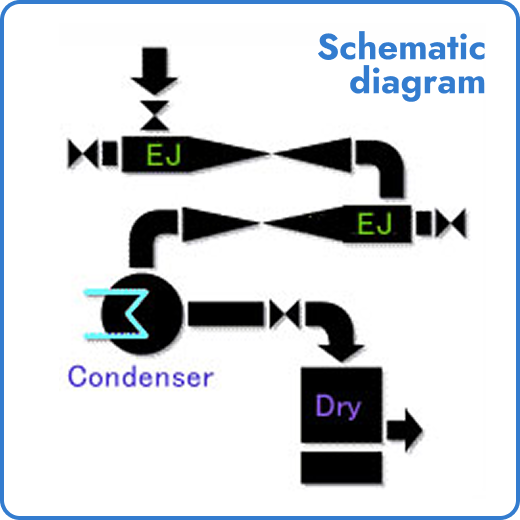
Combining ejectors for large-volume pumping with a dry vacuum pump creates an oil-free, environmentally friendly pumping system.