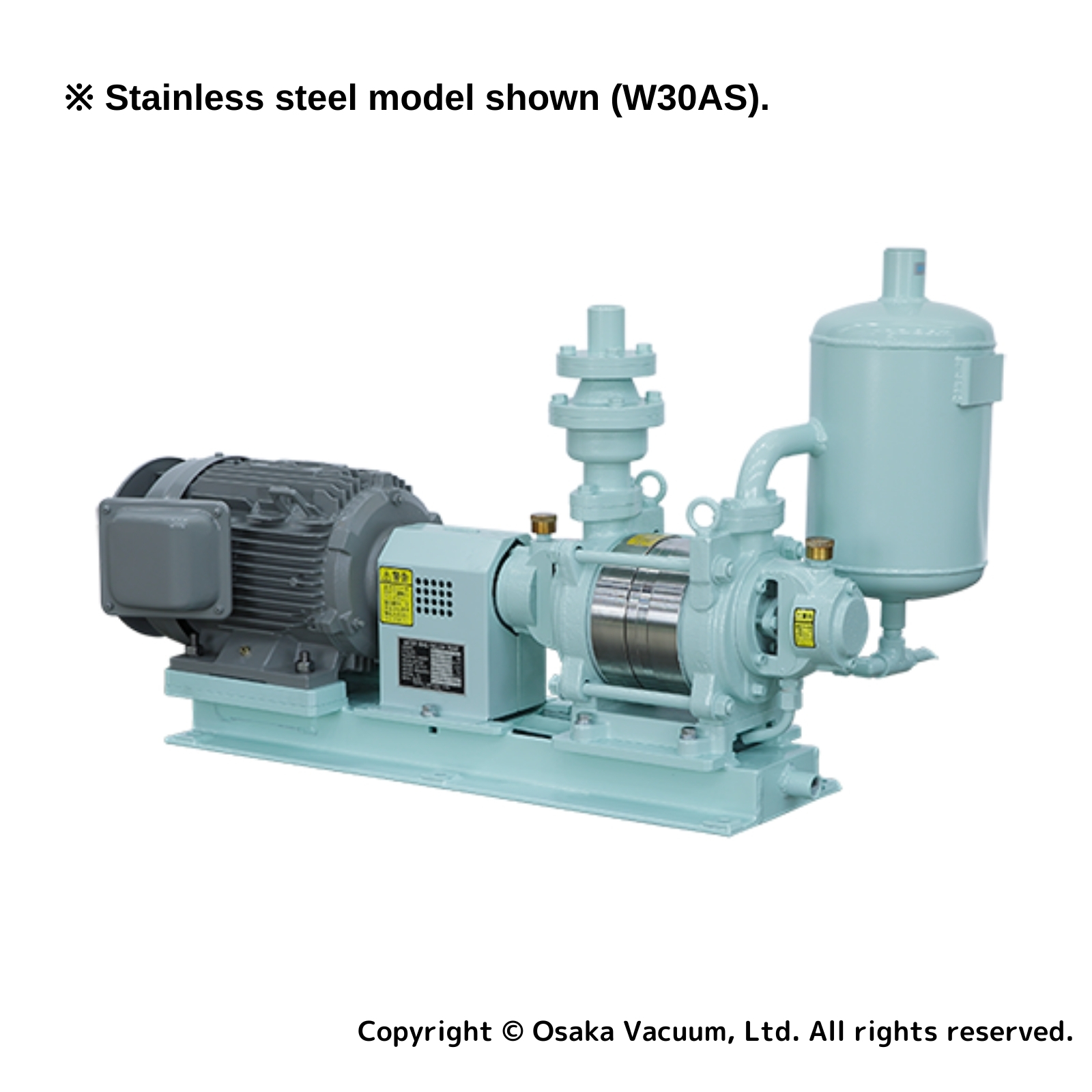
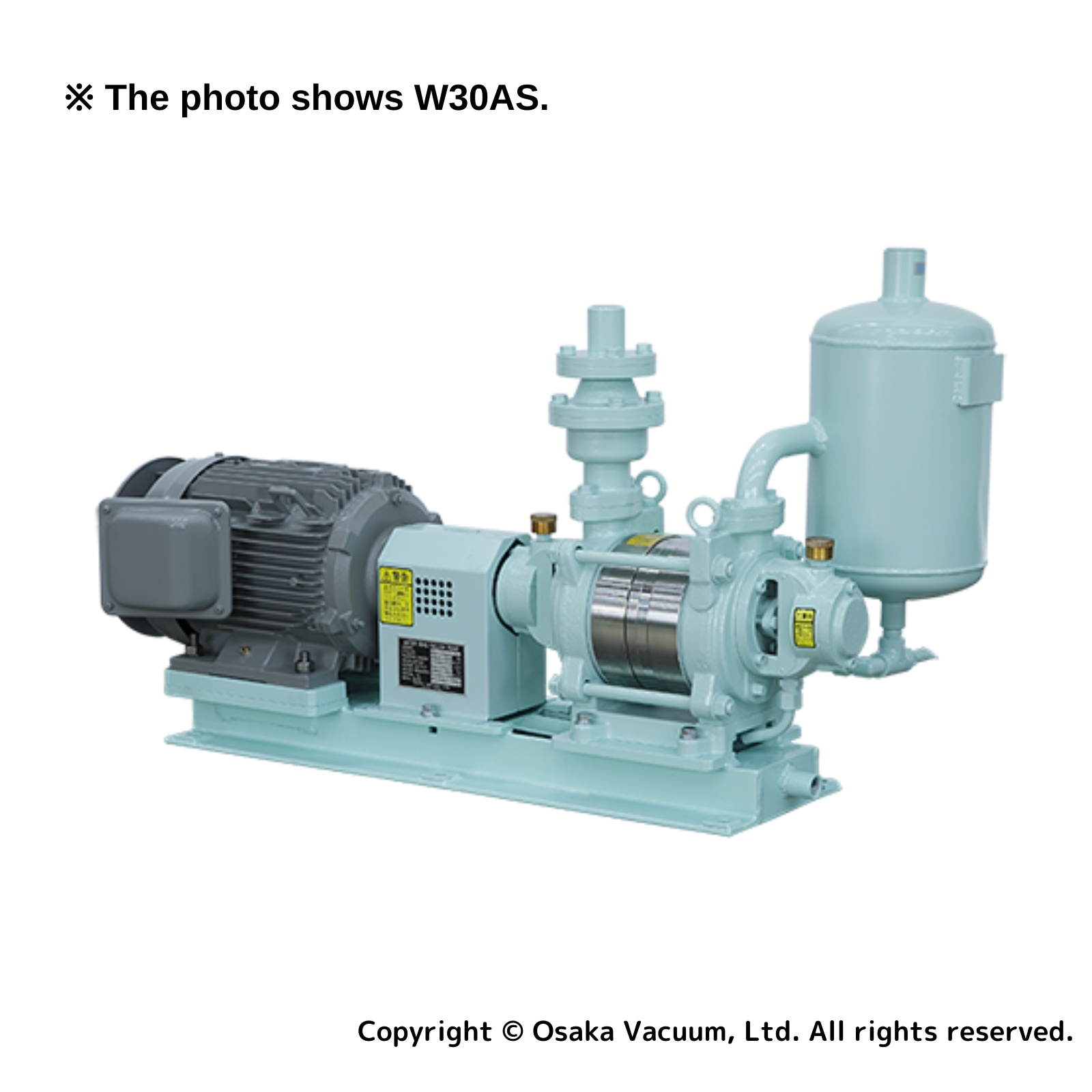
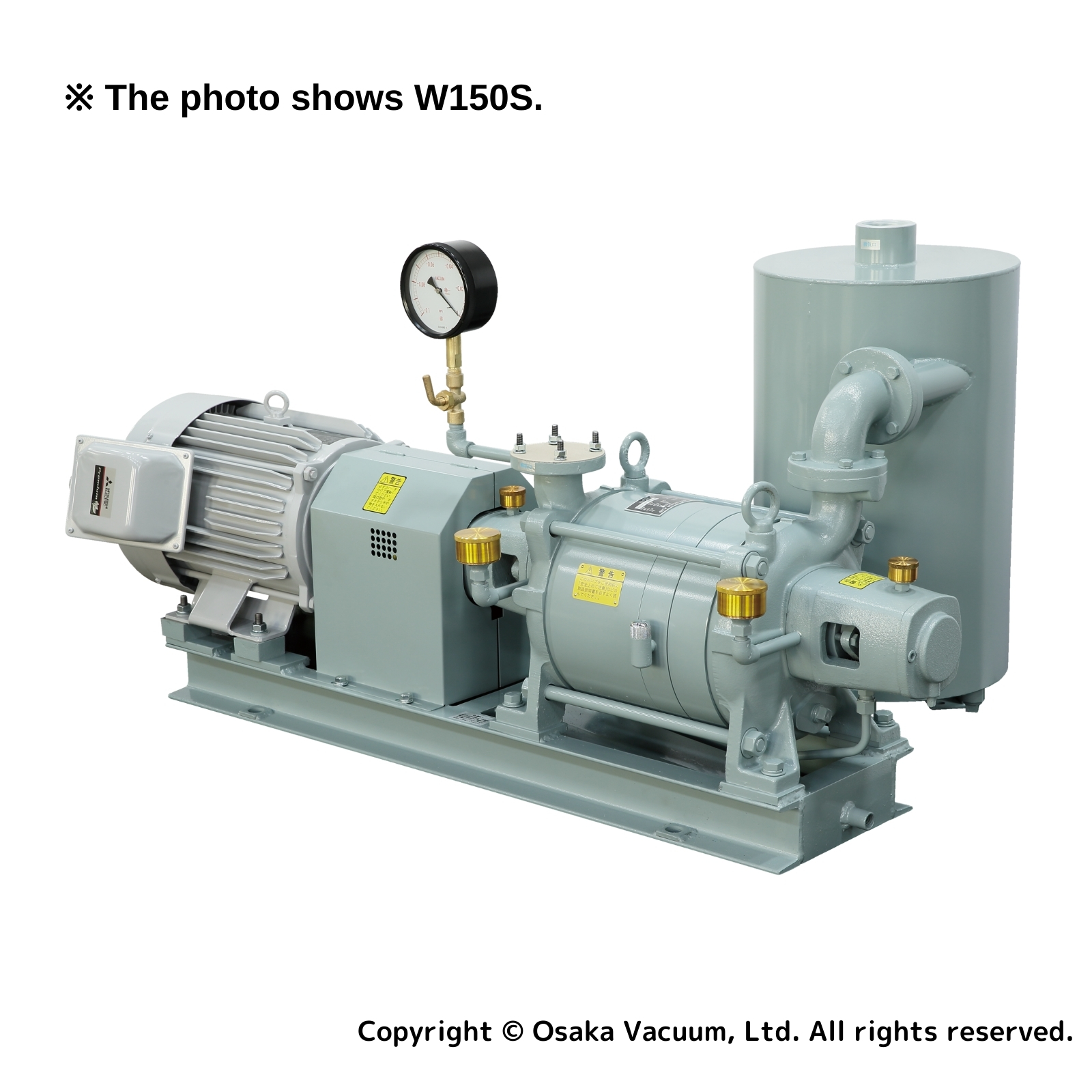
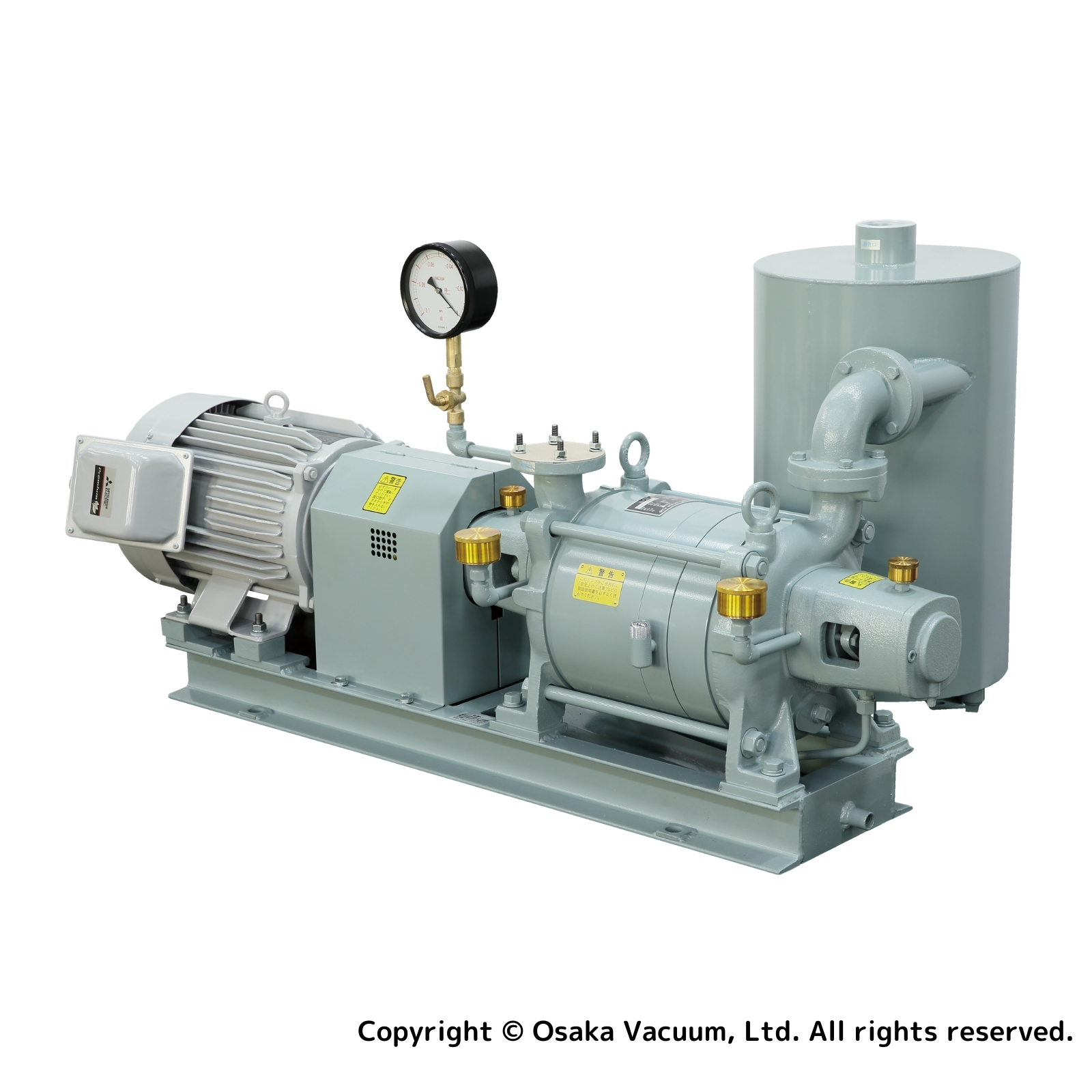
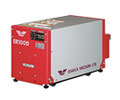
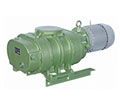
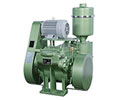
Liquid-ring Vacuum Pumps (Water-ring Vacuum Pumps)
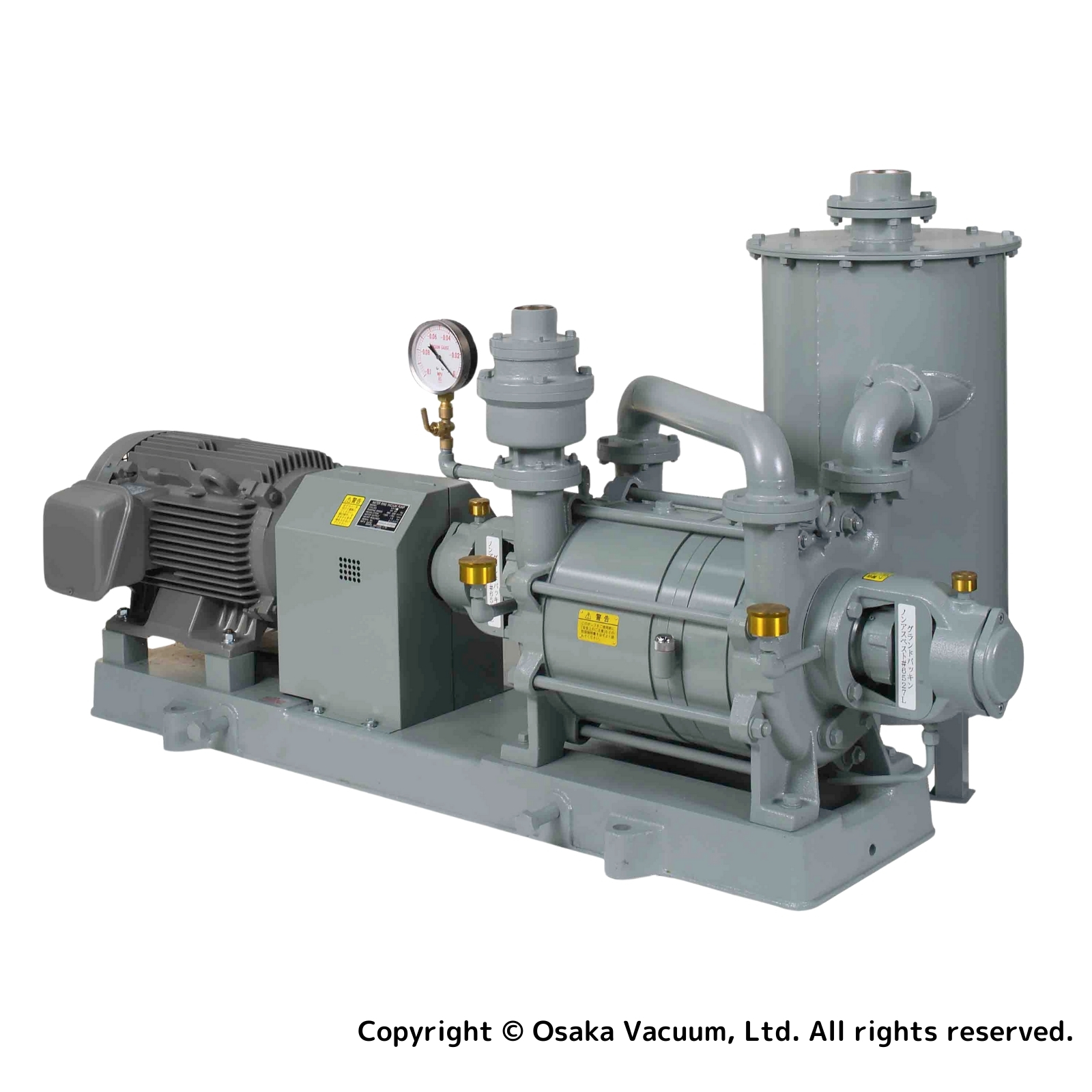
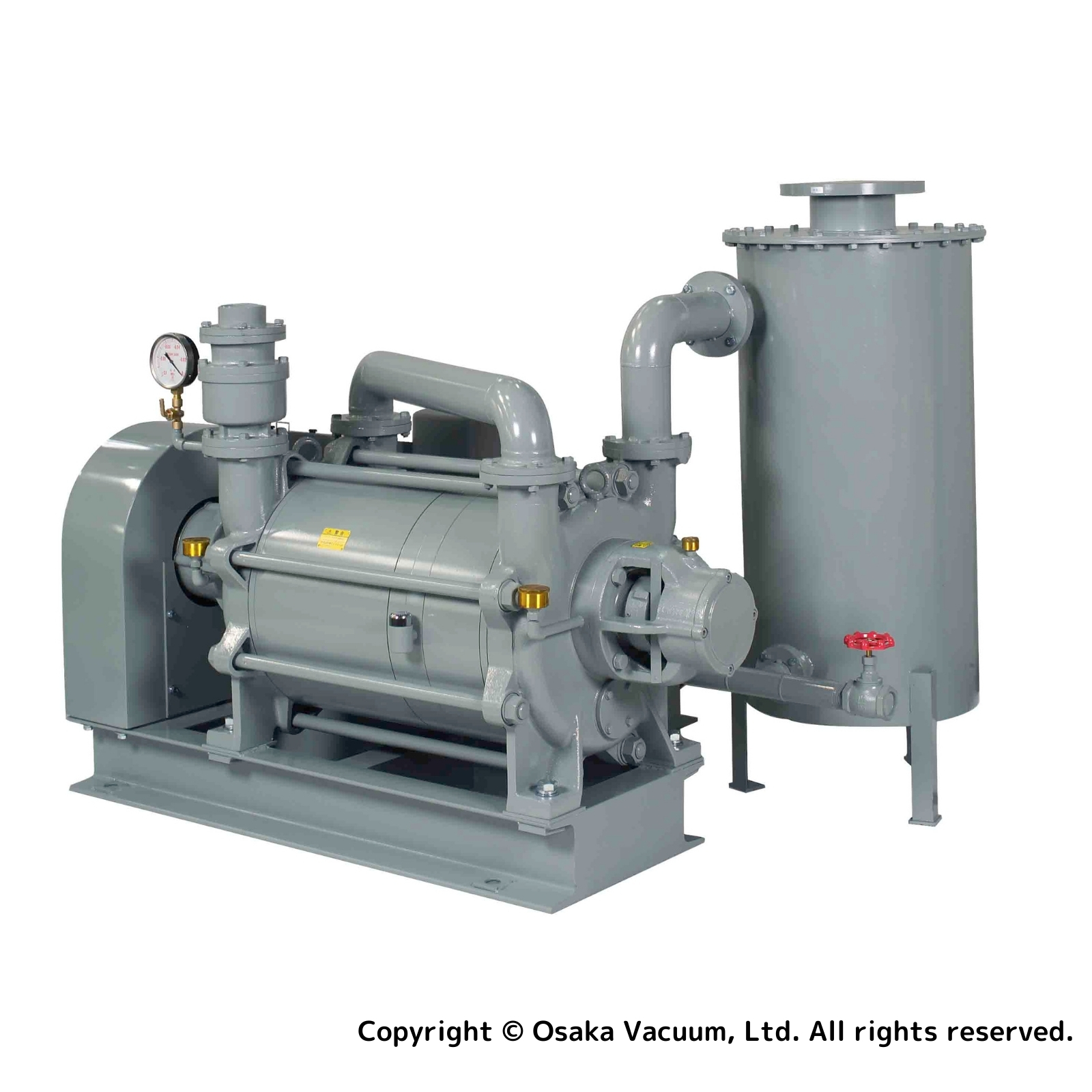
A liquid-ring vacuum pump can compress up to atmospheric pressure using water or a process liquid as its sealing liquid. It can achieve a base pressure close to the vapor pressure of the sealing liquid, and is often called a water-sealed vacuum pump because water is frequently used as the sealing liquid.
Osaka Vacuum’s liquid-ring vacuum pumps operate using water or other sealing liquids. Using the appropriate sealing liquid allows the pumps to handle condensable gases, such as water vapor and organic solvents.
Circulating the sealing liquid in a closed system reduces waste liquid.
Additionally, the liquid ring vacuum pump can be used in conjunction with other pumps to meet a variety of processes. For example, the liquid ring vacuum pump can be used with a Roots pump to attain high exhaust and high vacuum using less energy. (PRL series)
Also, an air ejector can be added to improve the base pressure and prevent cavitation. (1-stage air ejector: WA series; 2-stage air ejector: WB series)
Compression Principle and Exhaust Process of Liquid-ring Vacuum Pumps
Compression PrincipleThe pump body consists of a casing and an impeller housed inside. When the sealing liquid is introduced into the casing and the impeller is rotated, the liquid is pressed against the inner wall of the casing by centrifugal force, forming a ring of water (liquid ring). Numerous spaces, separated by the impeller blades, are created between the blades and the sealing liquid. Since the impeller is mounted eccentrically to the casing, the volume of each space changes as the impeller rotates. This volume change is utilized to continuously perform suction, compression, and exhaust.
Exhaust ProcessThe aspirated gas is first compressed inside the low-pressure side casing. It is then sent to the high-pressure side casing via a connecting pipe, where it is further compressed before being exhausted along with the sealing liquid. The exhaust side is equipped with a standard sealing liquid tank, where the exhausted gas is sent, separated from the sealing liquid, and released into the atmosphere.
Base Pressure and Sealing Liquid TemperatureThe base pressure is affected by the vapor pressure of the sealing liquid. Since the sealing liquid evaporates below its vapor pressure, the base pressure of the pump itself becomes approximately the vapor pressure of the sealing liquid. Additionally, the vapor pressure changes with the sealing liquid temperature; if the sealing liquid temperature rises, the vapor pressure also increases, thereby worsening the ultimate pressure of the pump itself.
Features
Optimal for exhausting water vapor, water droplets, and organic solvents. → Since water or a process fluid is used as the sealing liquid, it is effective for aspirating water vapor, organic vapors, and gases containing mist.
Resistant to exhausting gases containing dust and powder → The internal clearances of the pump are relatively large compared to oil-sealed rotary vacuum pumps, meaning that rotor lock rarely occurs even if fine crystals or debris enter the pump.
Various sealing liquids can be used → Efficient pumping can be achieved by selecting a sealing liquid appropriate for the specific application.
Simple structure, low cost, and easy handling → Less expensive than dry vacuum pumps and is easy to handle, with minimal environmental impact depending on the process.
Material and sealing options available → Depending on the application, mechanical seal types and all-stainless (SUS) gas-contacting parts can also be available.
W SERIES
Liquid-ring Vacuum Pumps (Water-ring Vacuum Pumps)
Industrial fields
- Laboratory instruments
- Metal and Steel
- Energy
- Medical / Pharmaceuticals
- Machinery
- Foods
- Heavy electrical equipment
- Transport